Inundation VR that accumulates experiences of disasters in a safe environment
Release:
Update:
NEW
INTRODUCTION
A large-scale disaster is a terrifying thing that suddenly deprives us of our daily lives. There are two types of disasters: one is sudden, like an earthquake, and the other is a tsunami or rainfall disaster where you can evacuate due to a warning sign. A review of damage survey research data from previous large-scale water disasters reveals that too many lives could have been saved if people had escaped. The most important thing that motivates people to take action to evacuate is the experience of a disaster. However, the experience of disasters and lessons are not something that can be obtained casually. Therefore, Nippon Koei is focusing on the production of realistic disaster simulation image "inundation VR" that is connected to experience.
PROFILE
-
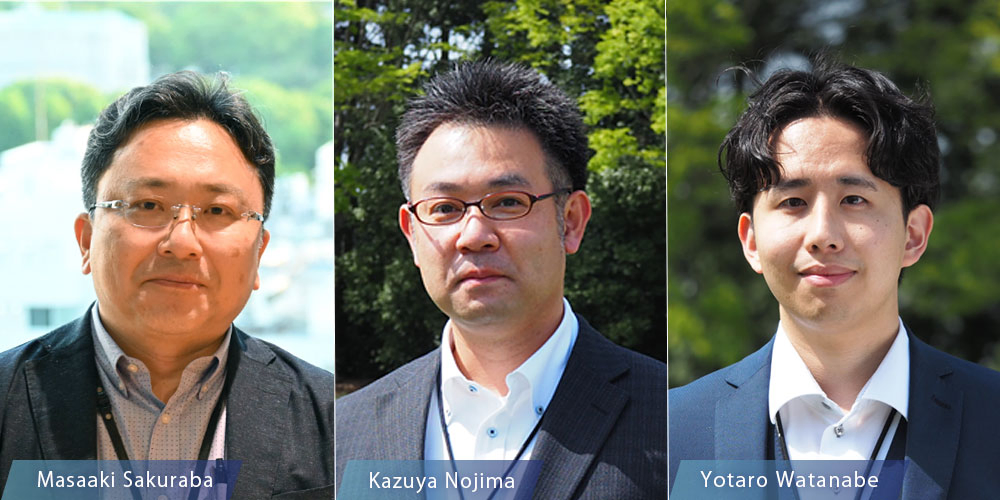
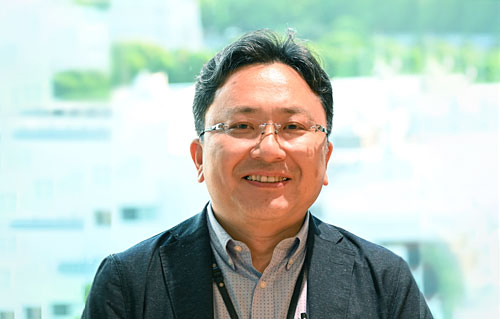
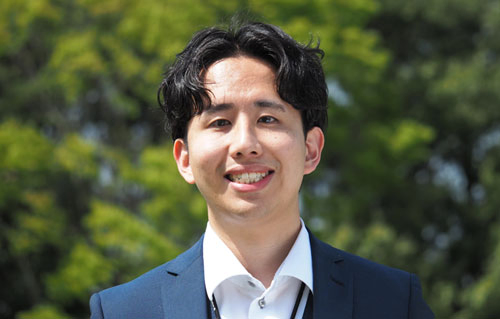
General Manager, Digital Innovation Division, Business Strategy Headquarters, Nippon Koei Co., Ltd.
Specially Appointed Professor, International Research Institute for Disaster Science, Tohoku University (Visiting professors)Masaaki Sakuraba
Joined in 1994. Since joining the company, he has been engaged in river and coastal fields, including hydraulic experiments, numerical simulations, and information system design and development in the river field. Received Ph.D. (Engineering) in March 2004. After taking office as the director of the Center for Advanced Research at Research & Development Center in July 2018, he started research and development related to AI and digital application technology. Since July 2020, he has promoted overall DX for the Nippon Koei Group as General Manager of the Digital Innovation Department of the Business Strategy Headquarters (currently General Manager of the Digital Innovation Division).
-
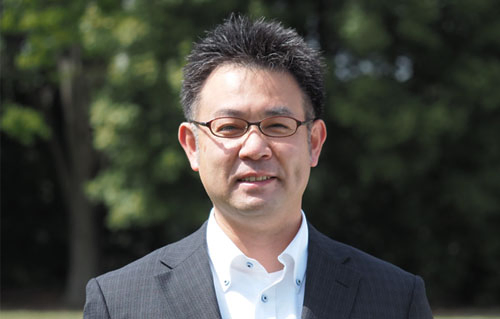
Center for Advanced Research at Research & Development Center, Nippon Koei Co., Ltd.
Project Associate Professor, International Research Institute of Disaster Science, Tohoku University(Visiting professors)Kazuya Nojima
Obtained a Ph.D. (Engineering) by working on computational grid generation and optimization problems for 3D FEM fluid analysis. Cultivated analysis technology and network construction technology at a company specializing in numerical analysis after doctoral course, and joined the company in 2012 after the 2011 off the Pacific coast of Tohoku Earthquake. Engaged in many numerical simulations, including tsunami disaster prevention. Feeling the importance of visualizing disasters, he started developing VR/AR technology in 2014. As an expert in XR technology, he promotes the utilization of VR/AR/MR technology and the expansion of production bases in the Nippon Koei Group.
-
Research & Development Center/ Center for Technology Development, Nippon Koei Co., Ltd.
Yotaro Watanabe
Joined in 2021. Assigned to the Hydraulics and Water Quality Group of Center for Technology Development. Engaged in work and research and development from the perspective of numerical simulations related to flood disaster prevention, such as tsunami inundation analysis and flood inundation analysis. Since 2022, he has been involved in the development of flooded VR and is using his knowledge of the Metaverse to advance the technology.
- *The department name, job title, and interview content were at the time of the interview.
STORY
The current inundation VR is the result of pioneering efforts whenever a new technology is announced.
―Technology is constantly evolving in the world of image, trying to get closer to the real world. In the field of disaster prevention, there has always been a demand for realistic visual representations that are linked to disaster experiences. How did Nippon Koei, a disaster prevention professional who develops VR technology in its own laboratory, provide a solution to this problem? We interviewed Mr. Sakuraba, Mr. Nojima, and Mr. Watanabe who are involved in the project.
3D modeling and visualization technology can be linked with various urban development techniques.
―The realistic VR images become the experience of a disaster, leading to preparations and evacuation actions in the event of an actual disaster. InundationVR has the potential to save the lives and livelihoods of many people, but the results are difficult to express in numbers. What kind of rewards and sense of mission do the three people involved in this project have in their daily work?
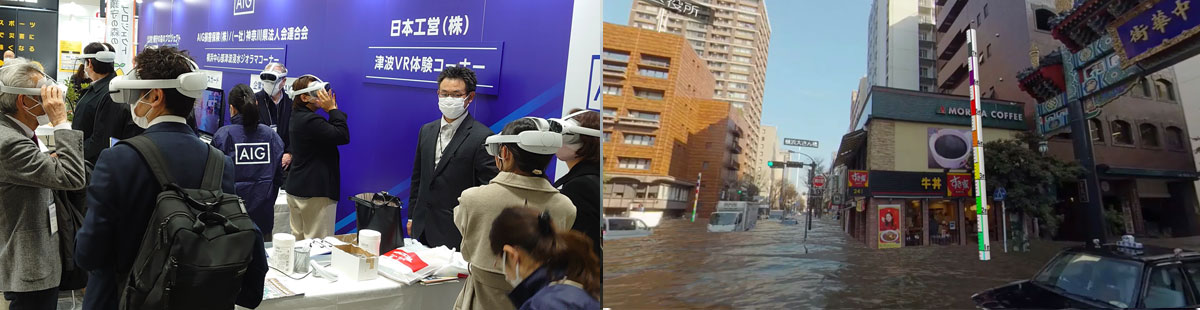
An era will come when more region-specific disaster prevention plans will be developed based on highly accurate tsunami analysis results.
―Nippon Koei’s inundation VR project team has been pursuing VR images that are as realistic as possible. What kind of future will be opened as this technology evolves? We asked them to talk about the future, along with the problems and solutions they see now.
On-site is always a series of trial and error. We performed a simulation of a debris flow in a certain place and created a video with a thorough system that combined topographical data, aerial photographs, and numerical measurements of the land. However, the person from there said, "Something is still wrong." When equipment improves, people have high expectations. There are many things that are said to be more and more, but I think that the key to creating realistic 3D images lies in those needs, and I am working hard every day.
―Inundation VR is an opportunity to protect people's current lives. We want as many people as possible to help us in the event of a large-scale disaster that is likely to cause us to lose our daily lives. This wish is the wish of everyone involved in disaster prevention, and it is also the wish of Nippon Koei, which has been engaged in disaster prevention work for many years. Nippon Koei is striving to improve its technology with the aim of both "enhancing people's prosperous lives" and "preventing the loss of people's prosperous lives."