
Providing Optimized Systems for Daily Maintenance of Infrastructure to Realize Efficient and Sophisticated Management.
The cloud-based centralized system will manage the entire process of infrastructure maintenance from receipt of residents’ requests to completion of repair works.
Utilizing Data for Advanced Infrastructure Management.
Release:
Update:
NEW
INTRODUCTION
Public infrastructure facilities such as roads, bridges, and tunnels, which are indispensable in our daily lives, are now facing the crisis of aging and deterioration. According to the "White Paper on Land, Infrastructure, Transport, and Tourism in Japan, 2021", 63% of roads and bridges, and 42% of tunnels are estimated to have been used for more than 50 years in 2033.
As public infrastructure facilities become deteriorated, an increasing number of requests and complaints for road repairs are delivered to municipalities. Every day, local governments are busy receiving requests, contacting and coordinating with contractors, and dealing with administrative procedures. Thus, the burden on officials is increasing. At the same time, contractors for maintenance and repair work also face an increasing workload in terms of on-site inspections, communication with related parties, construction work, and preparation of reporting documents.
To solve these constraints, Nippon Koei has developed real-time management (Note 1) systems that can deal with various contract types for contractors responsible for the daily management of the road environment such as the pruning of roadside trees, and can adapt to the development of digital technology. In October 2020, Nippon Koei released the first version of "Manesus", an infrastructure maintenance management support system on the cloud basis, which has the function of receiving requests from residents, monitoring, and recording patrol and actions. Since then, Nippon Koei has expanded the function of the application to conduct centralized management for multiple districts under the scheme of comprehensive outsourcing from local governments.
As of July 2022, the system has been utilized in several municipalities and has proven to be effective in reducing the burden on users and improving operational efficiency. We interviewed the persons in charge of the development of this system about how it was developed, how rewarding it is, and what is the future plan.
- Note 1:“Real-time management" refers to a system based on digitalized data that enables rapid decision-making and judgment through the constant and immediate sharing of information by all parties involved.
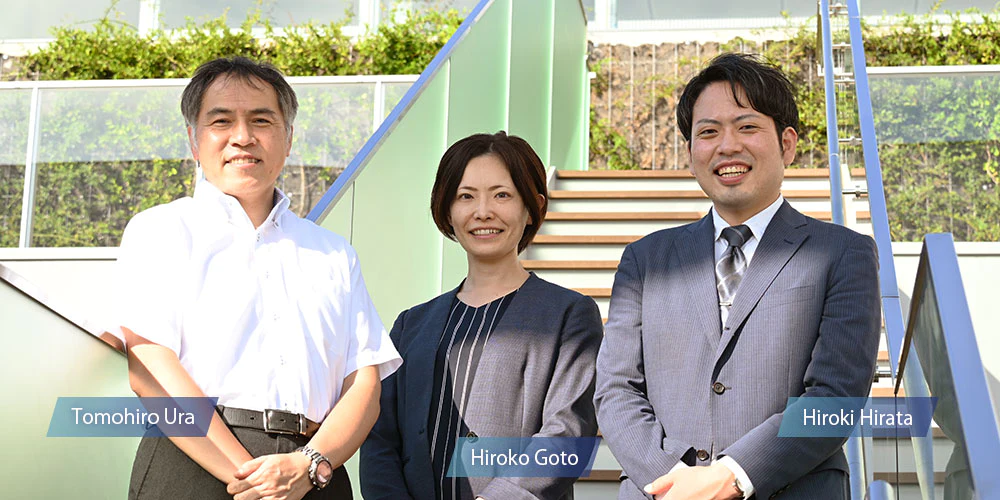
PROFILE
-
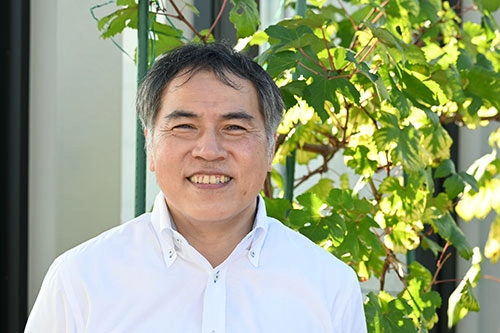
General Manager, Road Project Management Office, Road Division, Nippon Koei Co., Ltd.
Motohiro Ura
He joined the company in 1996. From 1996 to 2012, he worked on landslide prevention and other land conservation projects in Hiroshima, Tottori, Fukuoka, and the head office. Since 2013, he has been involved in road infrastructure-related projects, and in 2018, he began developing projects related to maintenance and management support for municipalities at the Infrastructure Management Center (now the Business Creation Center), which is oriented toward expanding its business domain. Within the development and enhancement of the business model, he was involved in the development of the maintenance and management support system "Manesus".
-
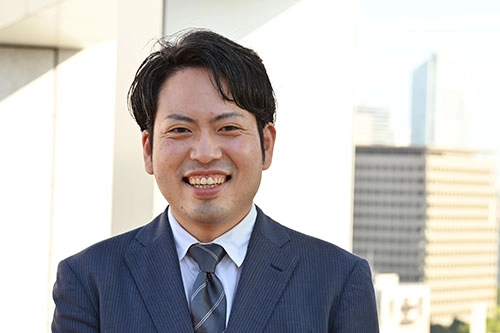
Road Project Management Office, Road Division, Nippon Koei Co., Ltd.
Hiroki Hirata
He joined the company in 2016. He has worked on asset management projects, mainly for road infrastructure. In 2018, as with Mr. Ura, he began developing projects related to municipal maintenance and management support at the Infrastructure Management Center (now the Business Creation Center). In the development and enhancement of the business model, he was involved in the maintenance and management support system "Manesus" to drive the transformation of the management process.
-
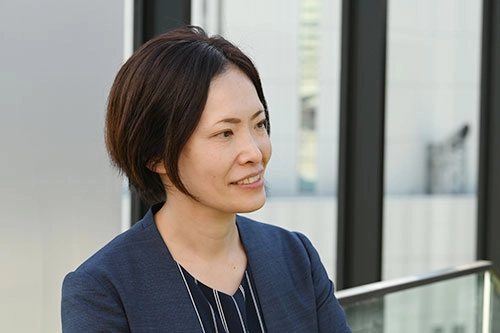
Road Project Management Office, Road Division, Nippon Koei Co., Ltd.
Hiroko Goto
In 2008, she was assigned to the Rock Analysis Group at the Central Research Center of Nippon Koei, and subsequently engaged in simulation work in the Watershed Erosion Control Group. Since 2018, she has been involved in the development and study of new technologies such as drones and artificial intelligence (AI) at the Center for Advanced Research. Since 2022, she has been participating in projects related to road maintenance and management support for municipalities at the Road Project Management Office. She is mainly involved in enhancing and expanding the business model by analyzing data and examining the use of data through GIS.
- *The department name, job title, and interview content were at the time of the interview.
STORY
Deteriorating public infrastructure facilities
To reduce the burden on municipalities and contractors who are forced to deal with maintenance and repairs
−−−How did you come to develop the infrastructure maintenance and management support system "Manesus"?
- Note 2:"PPP" stands for Public-Private Partnership.
In response to this problem, we wanted to help them by improving the efficiency of the daily management of roads. Numerous communications, coordination, paperwork, and procedures occur between the municipality and the maintenance and repair contractor from the time a repair request is received from a resident until the corresponding action is completed. The series of work, which occurred thousands of times a year, was done mainly by phone, fax, and e-mail and was extremely cumbersome. Therefore, we thought that if we could communicate, share information, and perform procedures in the cloud, it would help reduce the burden on local governments and maintenance and repair contractors.
−−−How did you design this system from there?
During the design process, we proposed the concept of "real-time management”. For example, by sharing information on residents' requests from the reception stage, the manager of local governments and the maintenance and repair contractors can quickly move on to the next action, such as on-site inspections. This cloud-based system was developed to enable real-time information sharing between the manager and the maintenance and repair contractor. As a result of system utilization, infrastructure management will become more efficient and sophisticated, leading to improved quality of services for residents. Thus, our "Manesus" is a service that integrates management and support systems.
- Note 3:"Agile" is a system development method in which small development cycles are repeated over and over. This allows for flexible and efficient development while minimizing risks.
Work time reduction of about 30% is realized.
Provide services tailored to the municipality and business environment.
−−−As of July 2022, this system has been adopted by several municipalities, including Fuchu City, Tokyo; Higashimurayama City, Tokyo; and Shiki City, Saitama Prefecture. What was the reaction of the users?
From now on, it will be increasingly important to manage the entire operation to be able to respond quickly to changes in contracting methods, the use of data and digital technology, and other developments. This system uses a development method that can flexibly and easily adapt to such changes, so that it is a win-win-win for residents, managers, and maintenance and repair contractors.
−−−In recent years, an increasing number of municipalities have adopted comprehensive outsourcing, in which the maintenance and management of infrastructure is outsourced to private companies and their expertise is utilized.
In fact, the Fuchu City Comprehensive Road Management Project, which started in April 2021 in Fuchu City, Tokyo, has had this system installed by the JV members. Furthermore, as a member of the project, we also participate in road management in the East District.
As we discussed ways to improve operations with various firms, including paving contractors, landscapers, and cleaners, we made a number of suggestions. For example, in this system, the more work a maintenance and repair contractor performs, the more data is accumulated. An analysis of the accumulated data may be able to predict the timing of weeding and the frequency of patrols. Thus, we deem it significant to utilize this system in order to advance management to the next stage.
Aiming to improve efficiency and sophistication of infrastructure maintenance management through data utilization.
−−−What initiatives would you like to take in the future by utilizing this system?
We began to make serious efforts to utilize data in July 2021. While the accumulated data is not sufficient, some themes have begun to show certain results, but it is frustrating that we are still in the middle of the road and have not yet produced clear results. It will take some more time to accumulate data, but I think we can create a new maintenance management system based on the data. If this happens, we will be able to help more people. We believe so and will continue to work on it.
Some services can be provided only by Nippon Koei, which is not a system development company. We will further expand our services based on an awareness of our role and strengths.