

Special Feature: Realising Disaster-Resilient and Sustainable Societies
ID&E Holdings has continuously developed technical expertise and knowledge at the forefront of disaster response over many years. Through specialist technical professionals providing field response, operational networks spanning 160 countries worldwide, and the integration of insurance and technology through collaboration with Tokio Marine Group, we are committed to realising disaster-resilient and sustainable societies.
- Dialogue
- National Land Conservation—Slope Disaster Prevention and Sediment Control Initiatives
- Community-Based Sustainable Disaster Prevention Initiatives
Dialogue A sustainable future shaped by disasters resilience

PROFILE
-
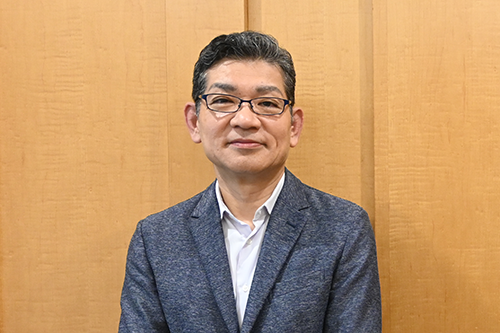
ID&E Holdings Executive Officer, Director General of Corporate Strategy Operations
Hidetoshi Sumita
Former Deputy Director General of Watershed & Water Management Operations and Director General of Business Strategy Operations, among others. He is currently responsible for managing the entire group’s business planning process as Director General of Corporate Strategy Operations and Business Collaboration Subcommittee with Tokio Marine Group, aiming to solve social issues and sustainable growth of ID&E group.
-
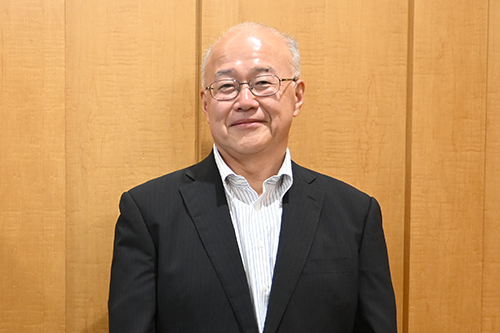
Nippon Koei Senior Specialist, Land Infrastructure Development Operations
Tamiaki Fujiwara
Former General Manager of Disaster Prevention Department, Land Conservation Division, among others. He is currently in charge of many tasks such as sediment disaster and landslides countermeasures across Japan as Senior Specialist. He is also involved in training local engineers with the aim of creating a safety and security society.
-
【Moderator】
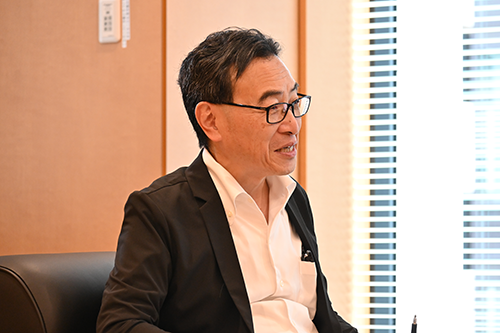
ID&E Holdings Senior Executive Officer, Director General of Sustainability Promotion OperationsTakumi Ueshima
After 40 years of service at Japan International Cooperation Agency (JICA), he joined ID&E Holdings. He is responsible for the sustainable management as Director General of Sustainability Promotion Operations and engages in realizing our mission, “Make the World a Better Place”, and a sustainable society.
- *Department’s name, position's name, and contents as of the interview date.
Realising Disaster-Resilient and Sustainable Societies
As climate-related disasters such as floods, heatwaves and typhoons intensify globally, and the persistent threat of major earthquakes continues to challenge resilience, we have entered an era in which disasters—whether driven by climate change or not—can no longer be dismissed as unprecedented events.
Disaster resilience extends beyond traditional disaster prevention—it represents the capacity
to minimise damage and achieve rapid recovery. Delivering this capability through our Group's
solutions and expertise has become a critical challenge in advancing societal resilience.
ID&E Holdings has continuously developed technical expertise and knowledge at the forefront
of disaster response over many years. Through specialist technical professionals providing
field response, operational networks spanning 160 countries worldwide, and the integration of
insurance and technology through collaboration with Tokio Marine Group, we are committed to
realising disaster-resilient and sustainable societies.
This article presents insights from two specialists who have confronted disasters throughout their
careers, discussing the essence of disaster resilience and ID&E's essential role. We hope this
dialogue will provide an opportunity for every member of the ID&E Group to seriously engage with
the fundamental question of how to accomplish to realise disaster-resilient societies.
What is "Disaster Resilience"—Exploring the intersection with Sustainability
ID&E's sustainability strategy has recently evolved to incorporate disaster resilience as a material focus area. This strategic repositioning, catalysed by our integration with Tokio Marine Group, reflects our commitment to comprehensive risk management and long-term value creation. This prompts us to revisit the question: what exactly does the concept of disaster resilience encompass?
Disaster resilience represents a critical capability that transcends traditional disaster prevention and mitigation approaches. Our framework operates on the recognition that complete damage prevention is not feasible, instead prioritising damage minimisation and rapid restoration to original or enhanced operational states. Resilience functions as an essential short-term response capability that must be systematically integrated within our broader sustainability strategy targeting long-term value preservation. Given the increasing frequency of extreme events, proactive engagement across individual, community, and enterprise levels has become a strategic imperative.
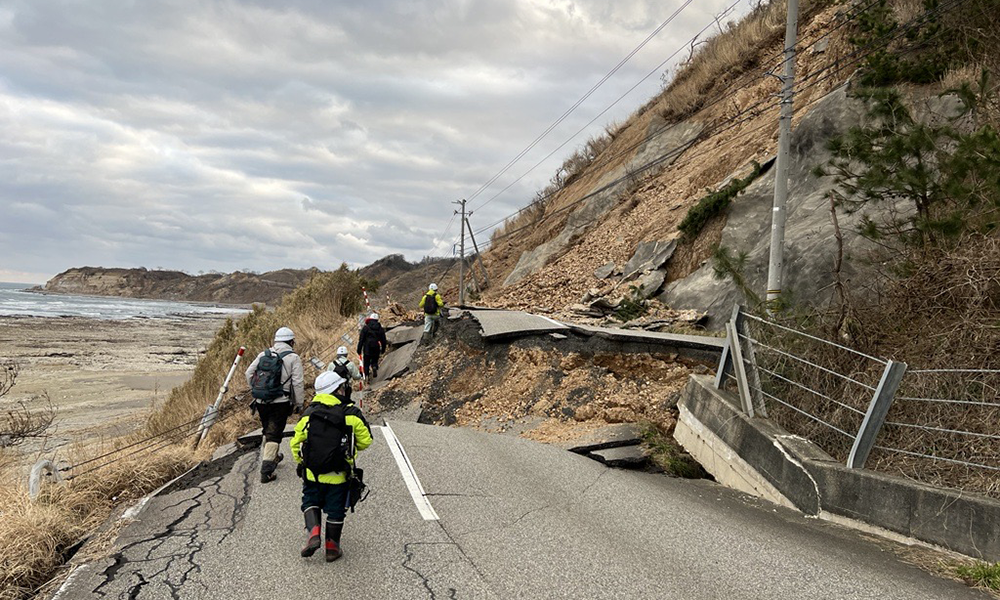
Our deployment in response to the Noto Peninsula Earthquake (Japan) demonstrated the critical importance of comprehensive recovery planning. Field observations revealed limited recovery progress and persistent community displacement one-year post-event—a pattern consistent with outcomes from the Great East Japan Earthquake. Traditional disaster response approaches focusing on individual events have proven insufficient. Our analysis indicates the necessity for temporal integration across multiple planning horizons, incorporating "Build Back Better" principles through multi-stakeholder collaboration to achieve effective regional recovery outcomes.
This illustrates the strategic integration requirements between sustainability—which establishes enduring operational conditions—and resilience—which enables rapid restoration to enhanced performance states are inseparable as concepts.
Competitive Differentiation Through Technology and Strategic Partnerships
What constitutes ID&E Group's competitive positioning within the disaster response and resilience market?
First, we possess comprehensive technical excellence supported by our expertise and track record. We employ professional technical specialists with deep knowledge across rivers, geology, disaster prevention, transport, and urban planning sectors, maintaining networks spanning 160 countries globally as well as domestically—strengths that other companies cannot easily replicate. Our extensive consulting experience in disaster prevention, mitigation, and infrastructure development particularly distinguishes us from competitors.
Second, our group composition itself represents a key differentiator. Beyond urban spatial and
energy sectors, becoming part of Tokio Marine Group enables us to provide integrated solutions
that incorporate decision making from the perspective of insurance. This transcends traditional
construction consulting, offering unique value through multifaceted approaches to societal
challenges.
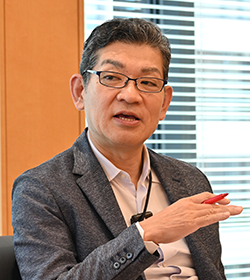
Technology Protecting Lives: Disaster Response Rooted in Experience
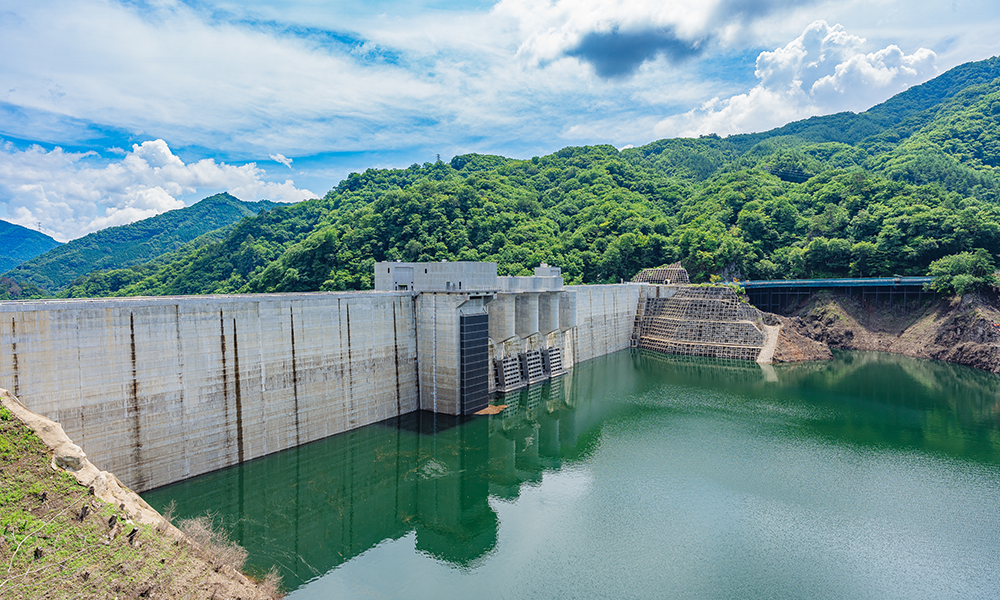
We were involved in a broad range of operations related to the construction of the Yamba Dam project in Gunma Prefecture, Japan, which we believe truly demonstrated the strength of our integrated capabilities. The project faced numerous challenges, including opposition movements and legal disputes; nevertheless, the Ministry of Land, Infrastructure, Transport and Tourism pressed with determination, responding to local calls for its swift completion. After its completion, tourism facilities were developed, contributing to the revitalisation of the region.
One of the key roles of the Yamba Dam was flood control. During the 2019 typhoon season,
Yamba Dam prevented downstream flooding by capturing upstream Tone River waters, despite
being in trial impoundment. As the on-site trial impoundment manager, I witnessed our planned
slope protection measures function perfectly under rapidly rising water levels. The infrastructure's ability to capture massive river water volumes and prevent damage was profoundly impactful from an engineering perspective. While this project was met with a range of perspectives and criticisms, I came to truly appreciate that many lives and properties had been protected. It reaffirmed my belief that the path we had taken was the right one.
Dam construction typically involves incremental increase in water level during trial impoundment phase in the construction, monitoring for leakage or displacement. However, when the typhoon caused rapid water level rises, Yamba Dam's unwavering stability demonstrated our technical excellence. Our involvement in Oda River improvement project (Okayama Prefecture, Japan) exemplifies this urgency—flooding during the planning phase claimed approximately 50 lives that might have been saved through earlier project completion. This experience reinforced our commitment to accelerated recovery and reconstruction programmes, ensuring communities remain protected when similar disasters occur.
Addressing Sediment Disasters: Managing Recurring Risk
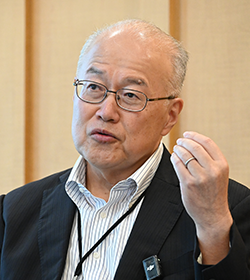
Disaster preparedness encompasses a wide range of areas, but among them, landslide countermeasures and sediment control projects represent one of ID&E's longstanding focus areas.
These projects fundamentally address sediment disasters. Slope failures cause devastating regional damage, and without proper countermeasures, disasters repeatedly occur in the same locations, causing continuous harm to communities. We conduct investigations and design countermeasures for such vulnerable areas.
Beyond monitoring dams and subsurface conditions, we must focus on protecting lives and livelihoods whilst developing cost-effective solutions. Such judgements require extensive engineering experience.
Particularly for public works projects, maintaining cost-effectiveness balance is critical. Since these considerations aren't codified in standards or legislation, we prioritise collaborative discussions with clients to determine optimal approaches that balance budget constraints with safety requirements.
Supporting Resilient Infrastructure Worldwide
The importance of disaster resilience is growing not only domestically but internationally. How do you perceive the current situation?
Whilst ASEAN countries experience economic development, their disaster preparedness remains nascent. Prime Minister Ishiba's ASEAN visit confirmed strengthened disaster prevention cooperation, expanding opportunities to deploy Japanese technology to governments and enterprises across these countries. We feel that instances where we can contribute locally are increasing.
In Japan, disaster resilience is positioned as a national strategy, with policies promoted by the Cabinet Secretariat under the Basic Act for National Resilience. The entire nation, including prefectures and municipalities, works towards resilience enhancement, and ID&E provides technical support aligned with this direction. We also participate in SIP (Strategic Innovation Program), advancing disaster counter-measures utilising cutting-edge technology.
Private Sector Expansion: New Value Creation Through Insurance and Technology Integration
ID&E focuses not only on public sector programmes but also private sector expansion. What value do you provide through group collaboration with Tokio Marine?
Enhancing value provision in disaster prevention for private operators represents a key objective in our collaboration with Tokio Marine. Particularly in "private disaster prevention," we broadly address soft aspects including corporate BCP (Business Continuity Planning) support, evacuation guidance, and risk assessment. Numerous latent needs exist in these fields that haven't yet materialised, and we anticipate certain expansion going forward.
For private enterprises, initial investment and post-disaster recovery timing are crucial. Unlike public works, companies make decisions based on 20-30-year cash flow projections. Whilst insurance covers certain aspects, technical approaches are necessary for uncovered areas. Through collaboration with the Tokio Marine Group, providing total solutions combining insurance and technology represents our strength.
Future Prospects: Taking "Disaster Resilience" Globally
Please share your vision for the value ID&E can provide in the future.
Our distinguishing feature lies in providing comprehensive, one-stop solutions across all processes: prevention, response, assurance, and recovery. Through collaboration with the Tokio Marine Group, we're developing new solutions that integrate insurance and engineering technology. We're also advancing integrated digital infrastructure solutions to address labour shortages, considering delivering new value to society as our mission. Thus, we envision long-term goals that transcend disaster-resilient societies to construct societies that overcome disasters and regenerate better.
We aim to advance shifts in awareness and human resource development so people in all countries can protect their lives and livelihoods from disasters through their own capabilities. Since overseas resources are insufficient, developing locally capable technical professionals is crucial. By leveraging Nippon Koei's networks and Tokio Marine's bases, deploying insurance and technology as integrated packages will establish sustainable frameworks.
Related Links
National Land Conservation—Slope Disaster Prevention and Sediment Control Initiatives
Nippon Koei contributes to the realisation of a safe and secure society in Japan, where landslides and mudslides frequently occur, by strengthening disaster prevention capabilities through investigation, design and monitoring.
Slope Disaster Prevention (Landslide Countermeasures): Yui District Landslide Countermeasures Project
In the Yui-Nishikurasawa area of Shimizu Ward, Shizuoka City, large-scale slope instability has been identified. This region is a vital transport hub, and any landslide event could cause in significant human casualties and economic disruption in the case of severed key east–west transport arteries.
Since FY2005, the Ministry of Land, Infrastructure, Transport and Tourism has designated this site for direct intervention. The
project aims to proactively prevent landslides caused by heavy rainfall or earthquakes through comprehensive slope stabilisation measures.
Strategic Protection Scope—Safeguarding Lives, Infrastructure and Economic Continuity*
The designated protection area for this countermeasure project includes facilities within the anticipated impact zone that are at
risk of being buried by landslide debris. In addition to the threat to human life and property, prolonged disruption of key transport arteries—such as the JR Tokaido Line, National Route 1, and the Tomei Expressway—could have far-reaching consequences not only for the local region but for the Japanese economy as a whole. To address these risks, slope stabilisation efforts have been continuously implemented in this area since 2005 and remain ongoing today.
*This section was prepared with reference to materials produced by the Chubu Regional
Development Bureau, Ministry of Land, Infrastructure, Transport and Tourism (Japan).
*Source: "Yui District Direct Landslide Countermeasure Project Explanation Materials" Available at: https://www.cbr.mlit.go.jp/kikaku/jigyou/data/r0612/shiryo_06_2.pdf, pp. 3, 10 (Japanese only) https://www.cbr.mlit.go.jp/kikaku/llgyou/data/r0612/shiryo_06_2.pdf (p.3、10) |
 |
Community-Based Sustainable Disaster Prevention Initiatives
The ID&E Group aims to contribute to the realisation of sustainable and secure lifestyles by working with local communities to rethink approaches to disaster prevention. This includes developing and implementing integrated disaster prevention and energy systems that leverage local resources—such as community networks, natural assets, and regional knowledge—to build long-term resilience.
"Daily Life as Training" Tsunami Evacuation Complex Facility: Izu City's Disaster Prevention Tourism Model

Nippon Koei Urban Space promoted disaster-prevention-oriented urban development in the Toi district of Izu City, Japan’s first Tsunami Disaster Special Alert Zone. The tsunami evacuation complex facility “Terrasse Orange Toi,” developed in Matsubara Park, serves as a tourism hub in normal times and an evacuation shelter during disasters. Designed so that everyday use naturally becomes disaster preparedness training, the project enhances disaster awareness while supporting tourism, contributing to a disaster-resilient and sustainable local community.
Akan Microgrid: Integrating Agricultural and Renewable Energy Systems

Nippon Koei Energy Solutions is participating in the Akan Microgrid Project in Kushiro City, Hokkaido, supporting regional energy independence and enhanced disaster resilience.The project integrates renewable energy sources such as solar power, biogas, and battery storage with local dairy farming operations. By delivering energy management and battery storage systems, it improves energy efficiency in normal times while ensuring autonomous power supply during emergencies, contributing to disaster-resilient and sustainable rural development.